The art of starting later.

Author: Mark

  • The Beautiful Sport of Muay Thai

    The Beautiful Sport of Muay Thai

    11 November 2026

    In Scott’s own words

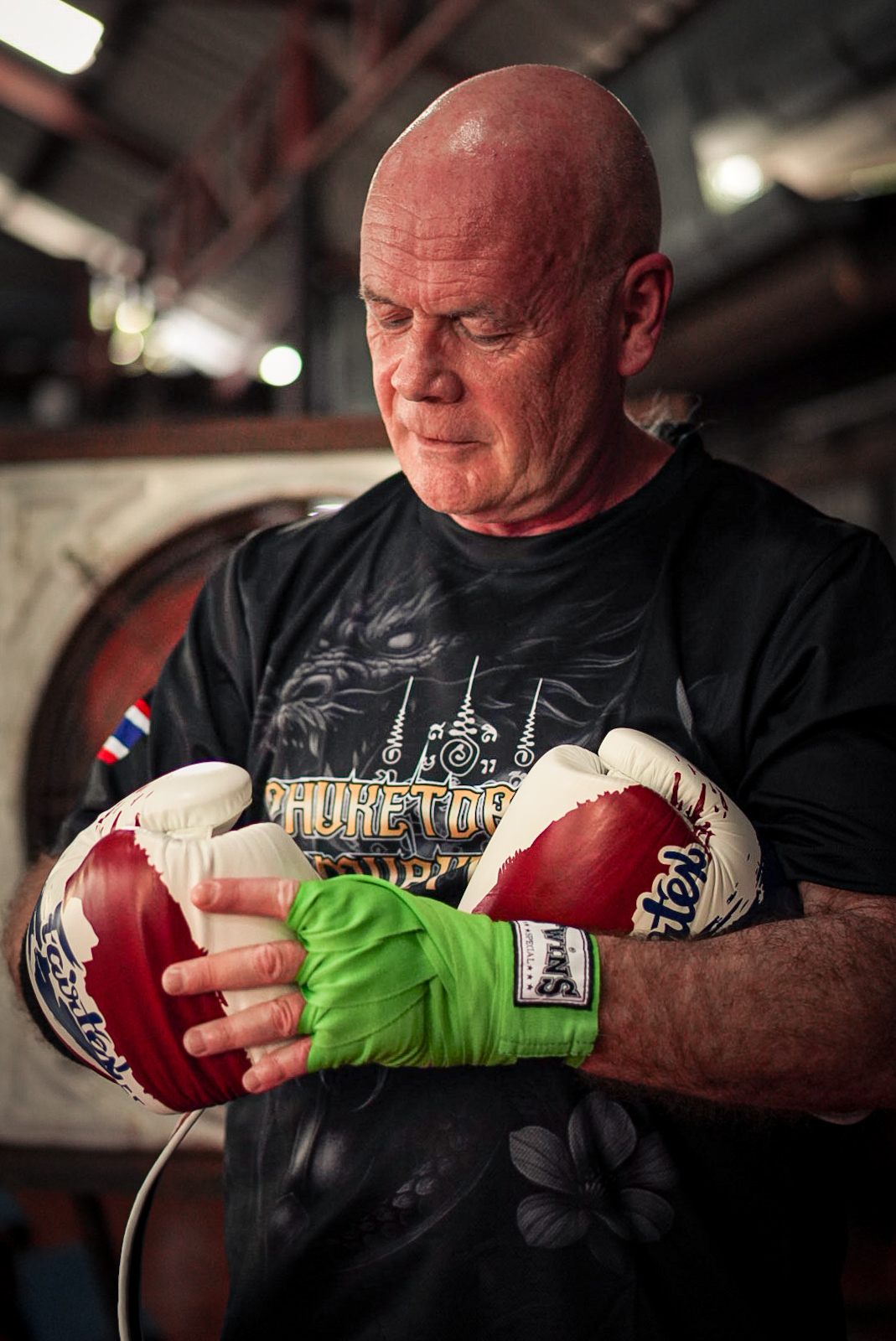
    I’m Scott Craig from USA (Tennessee) 66 years old. Even though I have been physically fit all my life, I just got into Muay Thai a few years ago and fell in love with the sport.

    Training in Phuket

    So much so that I traveled to Phuket, Thailand (Fitness Street) to train there. This is after seeing YouTube posts by Brad Newton who is an expert on Fitness Street, also had the pleasure of training with him a couple of times.

    I don’t intend to fight in Thailand, but do what I can to improve in Muay Thai.

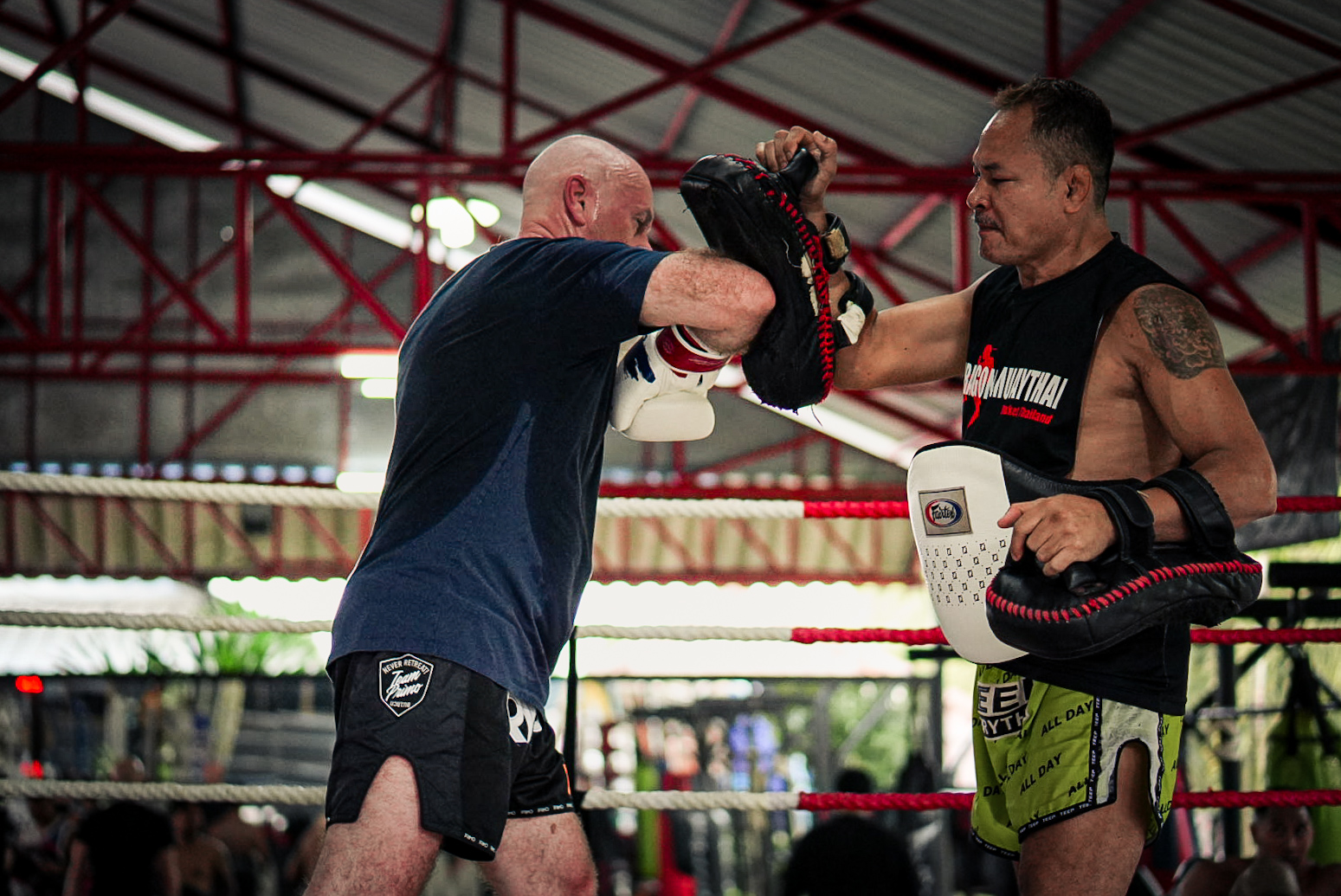
    I trained in a few gyms as there are many excellent ones to choose from. Rattachai and Dragon being ones I enjoyed the most.

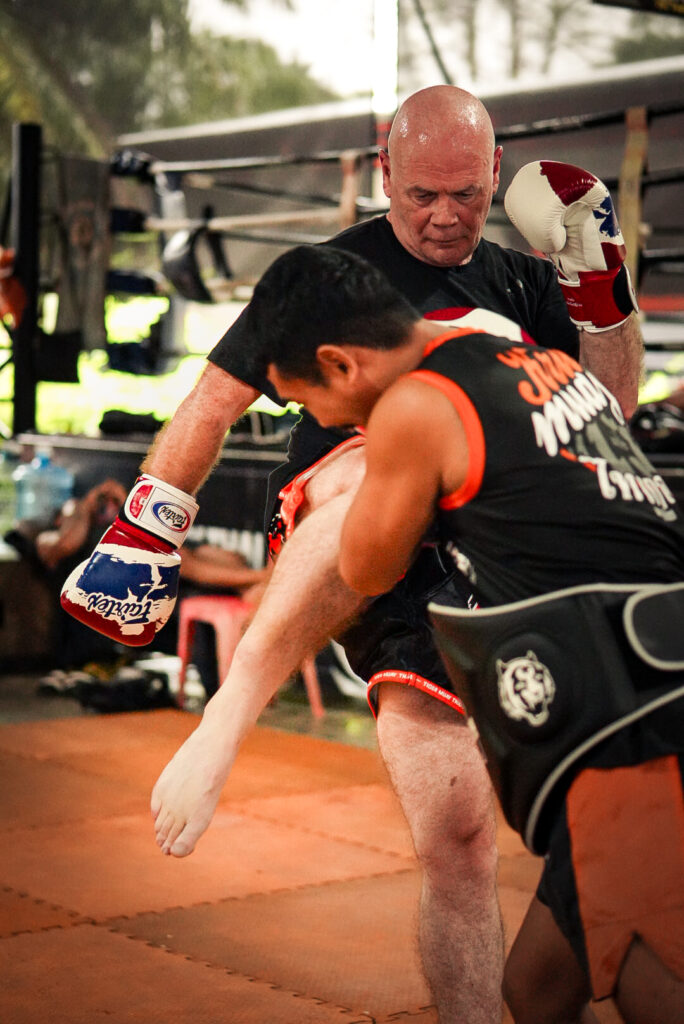
    Kru Marn from Dragon Muay Thai was among my favorite trainers. But all the trainers I encountered in Thailand were superb and so friendly, but Kru Marn is the one I just clicked with very well.

    Scott’s advice for older beginners

    My advice to any older folks contemplating doing Muay Thai: “Just Do It” don’t let age or experience be the reason you don’t start.

    The trainers in Thailand do very well in accommodating all experience levels from beginners to pro.

    However, if you decide to embark on this journey in Muay Thai, I recommend getting your cardio and physical strength up just a bit. That’s not to say you must be in peak physical condition. But this will help you concentrate on learning the basic Muay Thai skills vs. trying to get in shape at the same time.

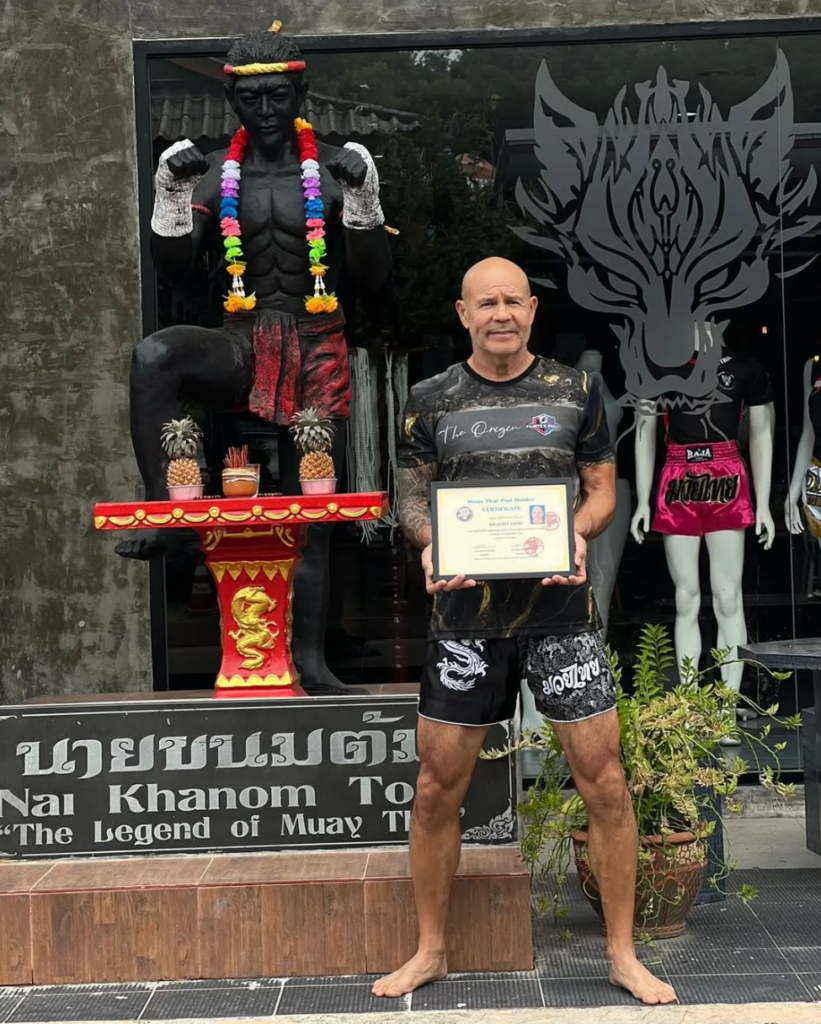
    Scott holding a training certificate beside a statue of Nai Khanom Tom

    Trust me, you will certainly improve your physical condition during training but it’s an advantage being in somewhat good shape to begin with.

    Good luck to any seniors or older folks like me just getting into the sport. The more you do it the more you will appreciate and respect the beautiful sport of Muay Thai!

    Share your story

    Started Muay Thai later in life? I’d love to hear how it went. Email your story, or read more on the Community page.

    Read more: ArticlesCan you start Muay Thai at 50?How beginners are taught in Thailand

  • Do You Have to Get Fit Before Starting Muay Thai?

    Do You Have to Get Fit Before Starting Muay Thai?

    1 November 2026

    Quick answer

    No, you don’t need to be fit to start Muay Thai, but a little basic cardio beforehand means you’ll enjoy it more and are less likely to get hurt.

    Do I need to be fit to start?

    No. A little basic cardio helps, but you don’t need to be fit to begin.

    How did you prepare?

    With a slow, home-based “couch to 5k” style routine: a handful of short runs and brisk walks a week for a few weeks before my first trip.

    Will the trainers push me too hard?

    In my first session, the Kru spent most of the class telling me to slow down and relax, and not to gas myself out in the first round.

    Before my first trip to train in Thailand, I did something that surprised me: I didn’t join a gym. I went for a walk.

    I’d assumed, like a lot of people probably do, that you need to already be fit before you can start something like this. That the gym is for people who’ve already done the hard part. So for a few weeks before that trip, I just built up some very ordinary cardio – a version of the “couch to 5k” plan, done slowly, at home, on my own schedule. Nothing dramatic. Just enough that I wasn’t starting from a complete standstill.

    In practice, that meant a handful of short runs and walks a week: some weeks three, some weeks only one, depending on work and how my knees felt. I wasn’t chasing a time or a distance. The only goal was to get my heart rate up gently and regularly enough that my body remembered what it felt like to be slightly out of breath on purpose. Some sessions were a slow ten-minute jog. Some were just a brisk walk round the block after a bad day at work. None of it looked impressive, and none of it needed to.

    It turned out that was more than enough to begin.

    On my first session, one of the Krus (trainers) spent most of the class telling me to slow down and relax rather than push harder.

    That surprised me too.

    I’d expected to be told to try harder, to keep up, to match the pace of people who’d clearly been doing this for years.

    Instead, the advice was almost the opposite: manage your own pace, don’t gas yourself out in the first round, you don’t need to prove anything today.

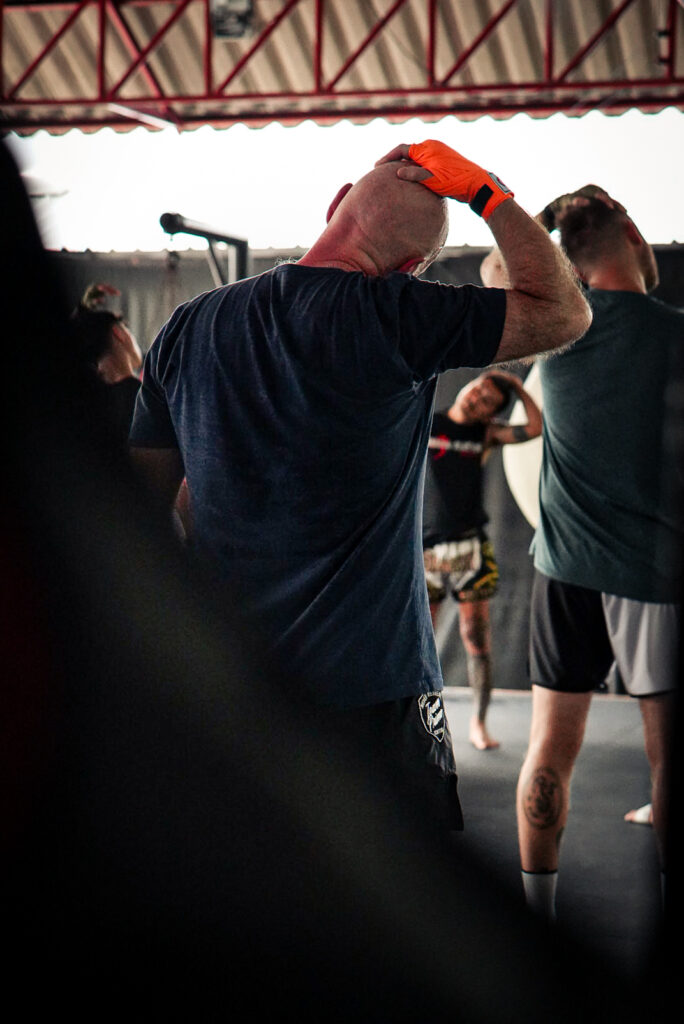
    Mark taking a breather with a hand on his head during a session
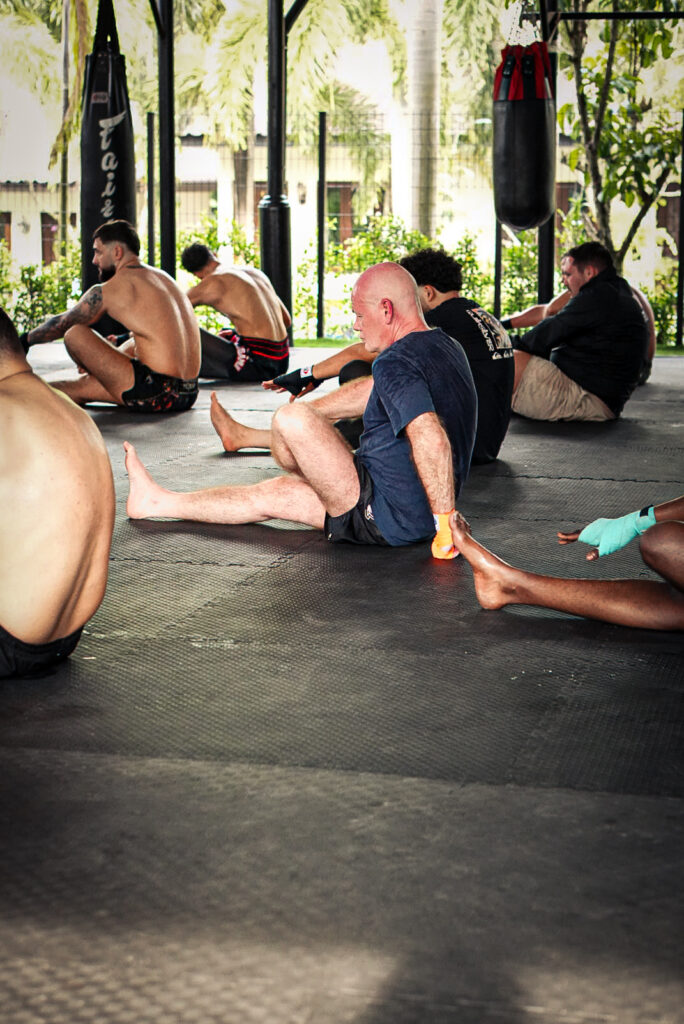
    Mark stretching on the mat with the rest of the class
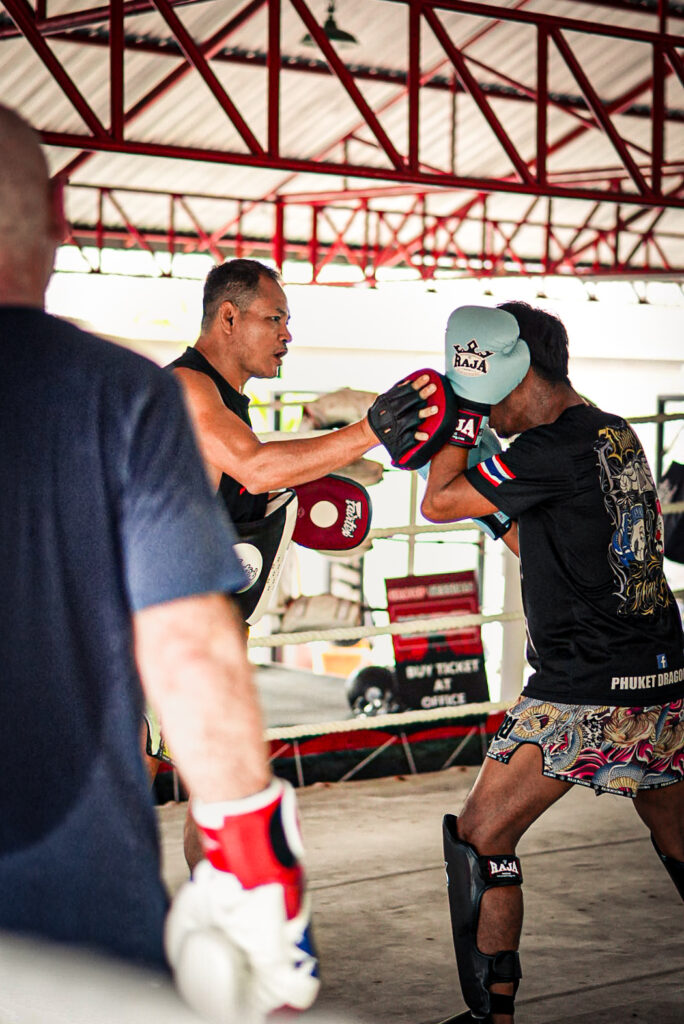
    Mark watching a trainer work the pads with another trainee

    That’s really the honest answer to “do you need to be fit to start Muay Thai?”. No – but you’ll enjoy it more, and injure yourself less, if you’ve got a small amount of basic cardio underneath you.

    A basic jab and cross, taught by Kru Bird at Tiger Muay Thai in Phuket. One of the very first things I learned.

    About the author

    Mark started Muay Thai at 56 and is now 59. Based in the UK, he trains at home between trips and at Dragon Muay Thai in Phuket, Thailand. Read more on the About page, or follow along on Instagram @muaythai50plus.

    Read more: ArticlesCan you start Muay Thai at 50?How beginners are taught in ThailandStarting Muay Thai later in life
  • Looking for a New Way to Stay Fit After 50? Here’s One You Probably Haven’t Considered.

    Looking for a New Way to Stay Fit After 50? Here’s One You Probably Haven’t Considered.

    1 October 2026

    What’s a good new fitness activity to try after 50?

    Anything combining movement, structure, and a bit of novelty works well — Muay Thai is one option that is more accessible than most people assume.

    Do you need combat sports experience to try Muay Thai?

    No — most people starting later in life have never done anything like it before.

    Is Muay Thai better than regular gym workouts for people over 50?

    Not necessarily ‘better,’ but it offers structure, variety, and social contact that a solo gym routine often lacks.

    If you’ve searched anything like ‘new way to get fit after 50,’ you’ve probably already tried the obvious answers. Walking more. Joining a gym. Maybe a few swimming lengths. All perfectly good, and all a bit… familiar. What a lot of people are actually looking for isn’t just more exercise — it’s something that feels like a genuine change, not another version of the same routine.

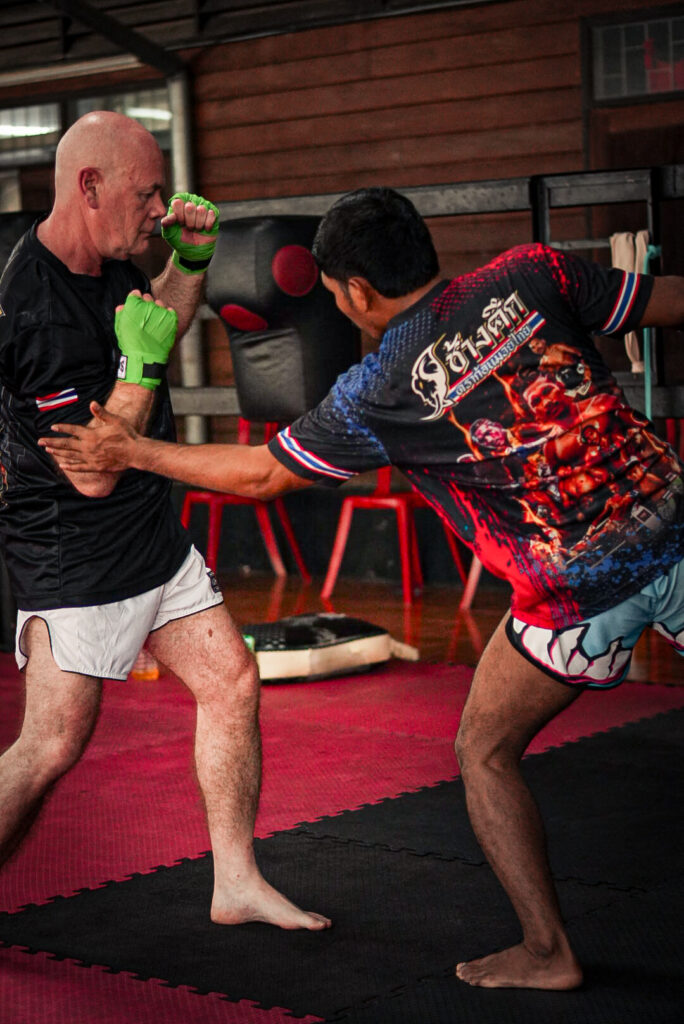
    Mark holding his guard as his trainer steps in

    I was in exactly that position. I’d done the walking, the gym memberships that quietly lapsed, the general sense that I should be doing ‘something’ without much enthusiasm for any of it. Muay Thai wasn’t on my radar at all — if anything, I assumed it was for much younger, much fitter people. What actually got me there was almost accidental, and what kept me there was realising how wrong that assumption was.

    What makes it different from most ‘new hobby after 50’ suggestions is that it isn’t just repetitive cardio with a different name. There’s a genuine skill to build — stance, technique, combinations — which gives you something to actually get better at, not just something to endure. There’s real structure to a session, rather than just ‘more steps’ or ‘more laps.’ And if you take it as far as I have, there’s a proper reason to travel, since a lot of serious training happens in Thailand, which turns a fitness hobby into something closer to an ongoing adventure.

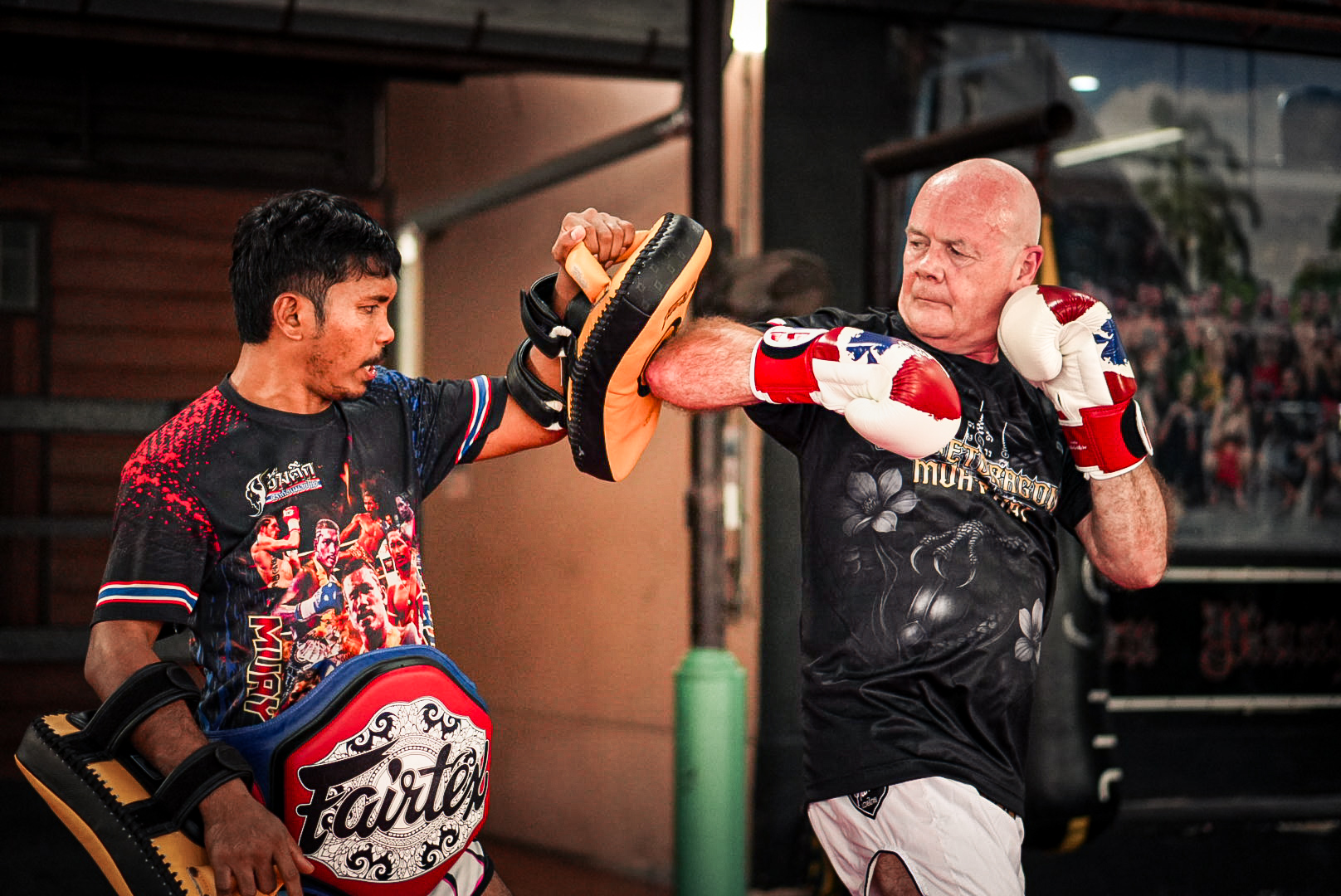
    Basic punches, first time trying them properly – with Kru Marn at Dragon Muay Thai, Phuket.

    The obvious hesitation is that it looks intense, or dangerous, or like something you need to already be fit for. In my experience, none of that holds up once you actually see beginner training rather than the fighter content that dominates search results and social media. Sessions are paced to the person, not a fixed intensity everyone is forced into, and nobody expects a finished product on day one.

    If you’re genuinely just looking for ‘a new way to get fit’ rather than specifically searching for Muay Thai, I’d gently suggest it’s worth a proper look before ruling it out. It solves a problem a lot of more common suggestions don’t: it gives you something to progress in, not just something to repeat.

    For a fuller picture of what starting actually involves, my articles on whether you need to be fit first, how beginners are taught in Thailand, and what starting later in life actually feels like go into the specifics — written from real experience, not theory.

    About the author

    Mark started Muay Thai at 56 and is now 59. Based in the UK, he trains at home between trips and at Dragon Muay Thai in Phuket, Thailand. Read more on the About page, or follow along on Instagram @muaythai50plus.

    Read more: ArticlesCan you start Muay Thai at 50?How beginners are taught in ThailandStarting Muay Thai later in life
  • Starting Muay Thai later in life
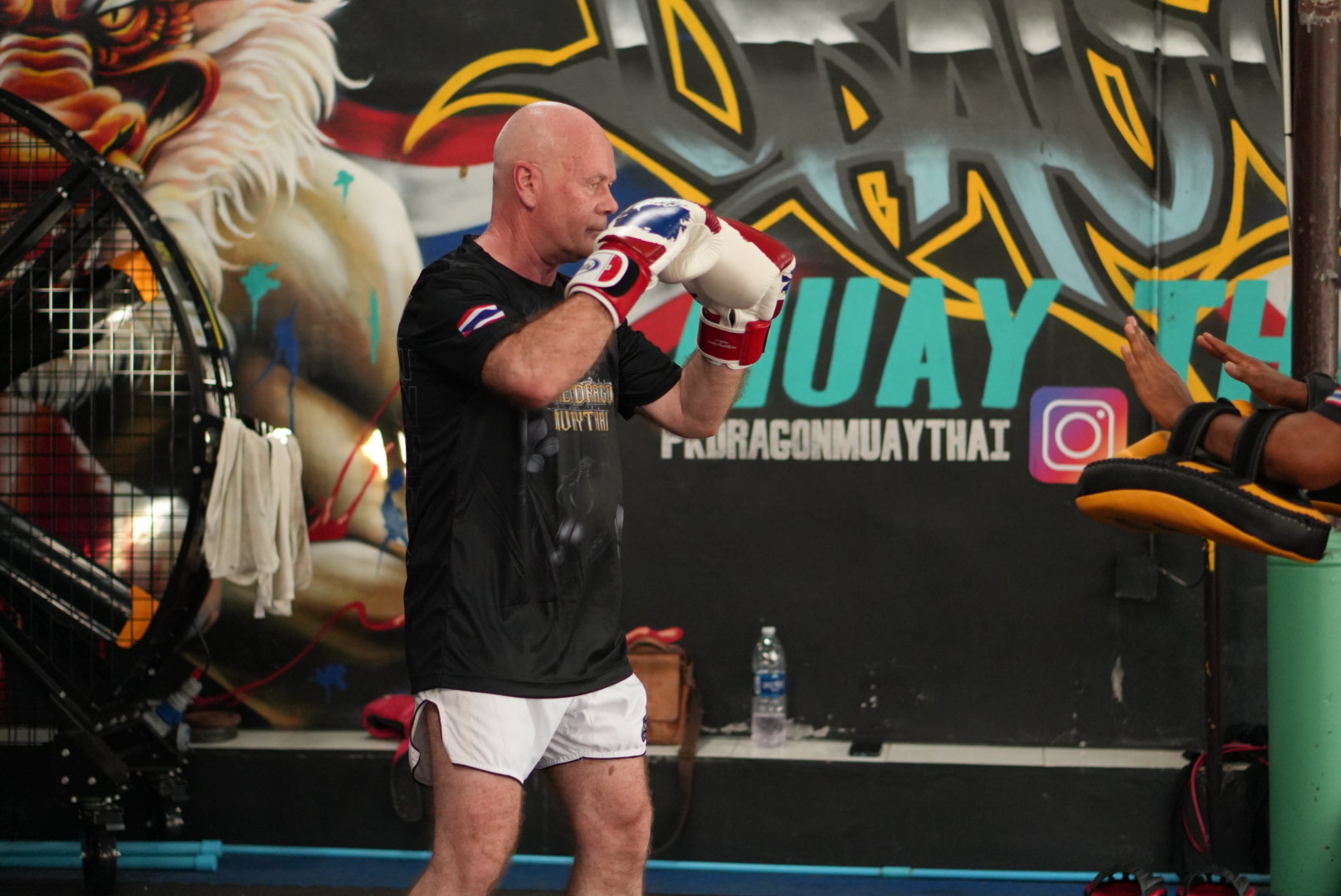
    Starting Muay Thai later in life
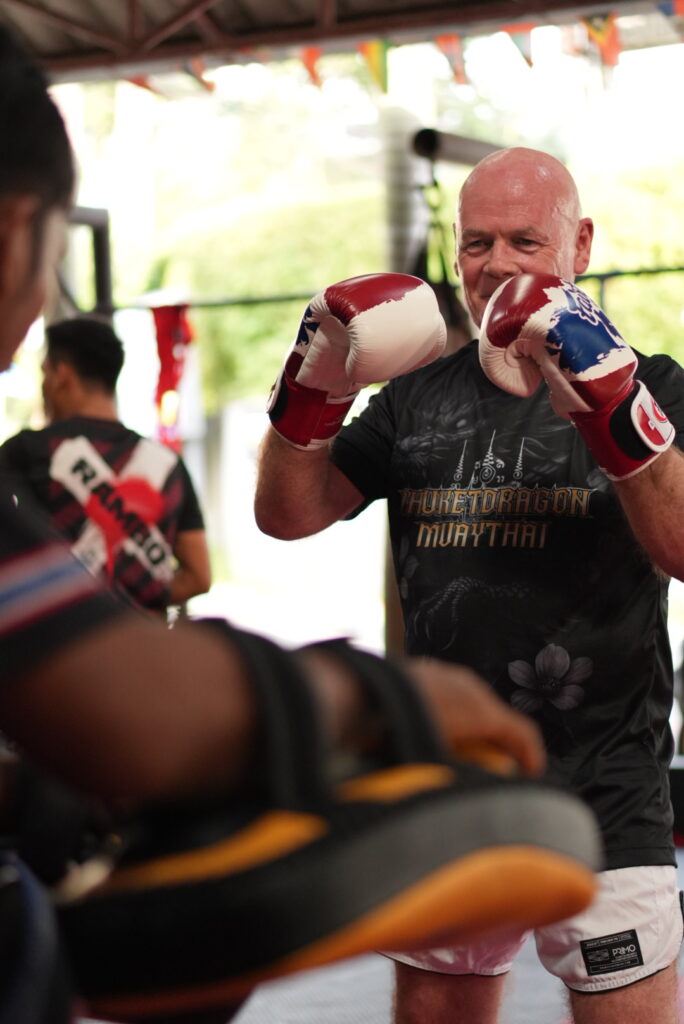
    1 September 2026

    Quick answer

    Starting Muay Thai later in life feels awkward and unfamiliar at first, but with repetition and sensible pacing it gradually becomes recognisable, repeatable and manageable.
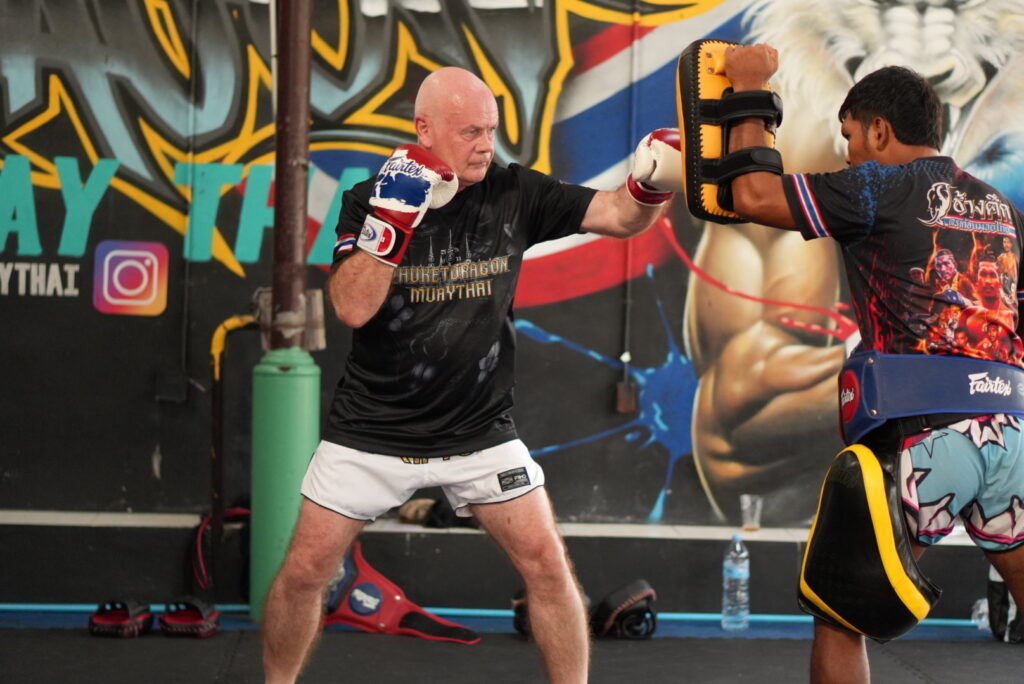
    What do the first sessions feel like?

    Slightly confusing, slightly awkward and harder to follow than expected. That’s normal: you’re learning something your body hasn’t done before.

    When does it start to feel easier?

    After a few sessions, movements begin to feel a little more familiar and less rushed. That comes from repetition, not from pushing harder.

    Is it normal to recover more slowly?

    Yes. Tiredness comes earlier, stiffness turns up in unfamiliar places and recovery takes longer. It means pacing matters more, not that you’re not capable.

    When you start Muay Thai later in life, the hardest part isn’t physical.

    It’s walking into the gym for the first time, not knowing what to expect, and not quite knowing how you’ll fit into what’s already happening.

    Everything feels new at once. The space. The rhythm. The people. The movement.

    Even if you’ve watched videos or read about it beforehand, none of that fully prepares you for what it actually feels like in the room.

    And that’s where most of the uncertainty comes from.

    The first sessions.

    The first few sessions are not dramatic. There’s no moment where everything clicks. No immediate sense of progress.

    Instead, it feels:

    • slightly confusing
    • slightly awkward
    • harder to follow than expected

    You’re trying to:

    • remember what you’ve just been shown
    • coordinate movements that don’t come naturally yet
    • keep track of what your body is doing

    All the while being aware that other people seem to know what’s going on. That combination can feel uncomfortable – especially at first.

    What feels difficult

    What surprised me wasn’t the physical effort – it was coordination.

    Even simple things:

    • a basic jab
    • a step and turn
    • holding a guard

    felt unfamiliar.

    Not because they were complicated, but because they were new.

    There’s a tendency at this stage to assume:

    “I’m not picking this up quickly enough”

    But that isn’t really what’s happening.

    You’re just learning something that your body hasn’t done before.

    Mark holding his guard as a trainer raises the pads
    Mark throwing a jab into a pad held by his trainer
    Mark throwing a punch into a pad held by his trainer

    The awkwardness phase

    Almost everyone goes through a period where they feel:

    • self-conscious
    • unsure of what they’re doing
    • slightly out of rhythm

    That doesn’t mean you’re struggling more than others.

    It means you’re at the beginning.

    In fact, that awkwardness is often a reliable sign that something new is being learned.

    It just doesn’t feel like progress yet.

    The role of repetition

    After a few sessions, something subtle changes. Not dramatic – but enough to notice.

    Movements begin to feel:

    • slightly more familiar
    • slightly less rushed
    • easier to return to

    This doesn’t come from pushing harder. It comes from repetition.

    Doing the same things again, without expecting them to feel perfect.

    Over time, that repetition reduces hesitation.

    Physical adaptation

    For most people starting later in life, the body adapts more slowly than the mind expects. You notice:

    • fatigue appearing earlier
    • stiffness in unfamiliar areas
    • recovery takes longer

    This is normal.

    It doesn’t mean you’re not capable – it means pacing matters more.

    And when pacing is respected, consistency becomes possible.

    What starts to change

    With a bit of time, a few things begin to shift. You feel:

    • less anxious walking into the gym
    • more comfortable in the environment
    • more aware of what’s expected

    The movements don’t become easy – but they become:

    recognisable

    repeatable

    manageable

    That’s where confidence starts. Not in performance, but in familiarity.

    A different kind of progress

    Progress at this stage isn’t obvious. It isn’t measured by:

    • how hard you hit
    • how fast you move
    • how you compare to others

    It’s measured more quietly. In:

    • coming back
    • feeling slightly less uncertain
    • noticing that what felt unfamiliar now feels possible

    That kind of progress is easy to overlook – but it’s what makes everything else possible later.

    A realistic takeaway

    Starting Muay Thai later in life doesn’t feel like a transformation.
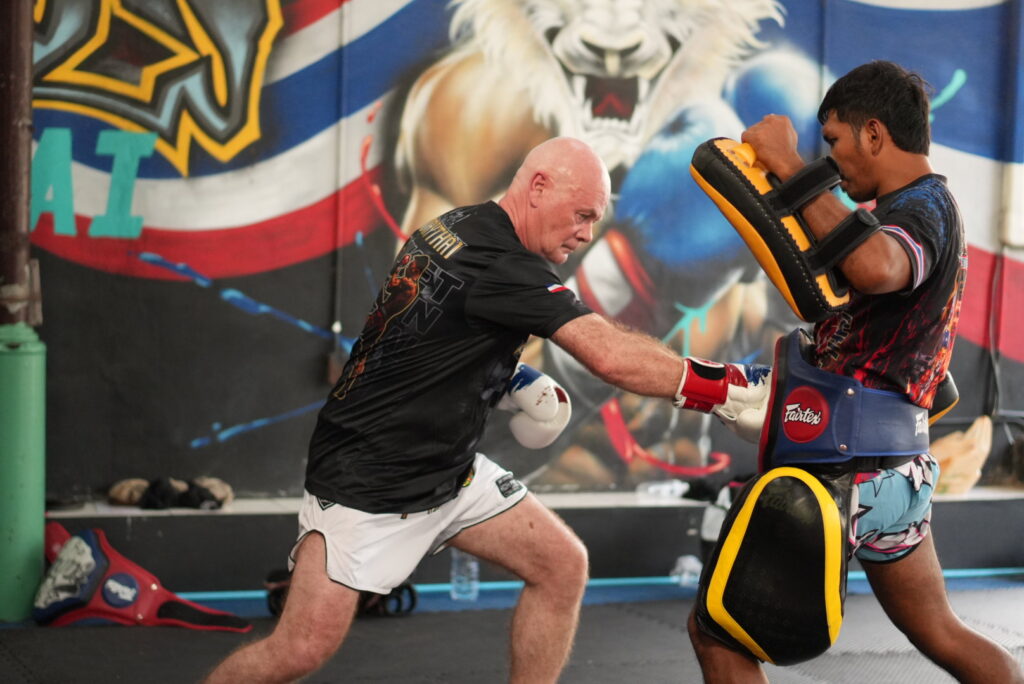
    It feels like learning, adapting, and gradually becoming more comfortable.

    There isn’t a single turning point where everything changes. There’s just a steady shift from “I’m not sure about this” to “I think I can keep going”.

    And for most people, that’s enough.

    About the author

    Mark started Muay Thai at 56 and is now 59. Based in the UK, he trains at home between trips and at Dragon Muay Thai in Phuket, Thailand. Read more on the About page, or follow along on Instagram @muaythai50plus.

    Read more: ArticlesHow beginners are taught in ThailandCan you start Muay Thai at 50?

  • How beginners are taught in Thailand

    How beginners are taught in Thailand

    30 August 2026

    Quick answer

    In my experience, beginners in Thailand are taught calmly and patiently, with technique, repetition and relaxation before intensity. It’s not the hard fight training you see online.

    Is beginner training as intense as fight training?

    Not in my experience. The warm-up is unhurried, people move at their own pace, and nobody is shouted at or singled out.

    Do beginners have to spar?

    No. Beginner training isn’t constant sparring, and there’s no assumption that beginners want to fight.

    Group classes or private sessions?

    Both help. Well-run group classes manage mixed levels, and private sessions are about doing things more clearly, not doing more.

    Before I trained in Thailand, I thought I had a reasonable idea what Muay Thai training there would be like. Hard – Relentless – Unforgiving.

    That impression didn’t come from nowhere. Most of what we see online shows fighters preparing for bouts – intense pad rounds, sparring, conditioning sessions that leave people exhausted and barely standing. It’s compelling, and it’s impressive.

    But it also creates a very narrow picture.

    As someone starting later in life, that picture was intimidating. I wasn’t worried about whether Muay Thai worked. I was worried about whether I would work in that environment – whether I’d cope physically, whether I’d slow things down, whether I’d simply be out of place.

    What I wanted to understand was simple. Is this how beginners are taught too?

    In my experience, it isn’t. And that difference matters more than most people realise.

    Expectations versus reality

    My expectations of training in Thailand were shaped almost entirely by what I’d seen online.

    I assumed beginner training would be a toned-down version of fight training – less power perhaps, but the same urgency, the same pace, the same expectation to push through discomfort.

    My first group class challenged that assumption almost immediately.

    The warm-up was unhurried. People moved at different speeds. Some stopped and stretched while others carried on. No one was shouted at. No one was singled out.

    What struck me most was not what we were doing, but what we weren’t doing. There was no sense of being pushed through material. No pressure to perform. No implied competition. That removed a huge amount of anxiety.

    The first thing that became obvious

    Thai trainers are exceptionally good at reading people.

    Within minutes, trainers knew who was new, who needed more explanation, and who needed to slow down – often before people realised it themselves.

    What surprised me was how quietly this was handled.

    There were no labels. No announcements. No separation of “beginners” from everyone else. Adjustments happened through small changes; a different drill, a softer correction, a nod to stop and rest.

    As an older beginner, this mattered enormously. I never felt exposed, but I also never felt ignored.

    That balance is difficult to achieve, and it’s something Thai trainers seem to have internalised through years of experience.

    The tone of instruction

    Instruction in Thailand is practical and understated.

    There’s no motivational speech, no encouragement to “push harder”, no attempt to manufacture intensity. Instead, instruction is continuous and calm.

    Corrections are constant, but they’re delivered without drama. A hand moves your guard. A foot repositioned. A pad is angled differently. Very little is made of it.

    Mistakes are treated as information, not failure.

    As a beginner – particularly later in life – this tone is reassuring. It creates an environment where learning feels normal rather than stressful.

    “Relax”

    In my private sessions, one word came up more than any other. Relax

    At first, I didn’t understand it. I wasn’t panicking or rushing deliberately. I was concentrating, trying to do things properly.

    Over time, it became clear that I was bringing unnecessary urgency to my movements – bigger actions than needed, rushing combinations, using effort where positioning would have been enough.

    Relaxation, in this context, wasn’t about being casual or disengaged. It was about efficiency.

    Smaller movements.

    Better balance.

    Less wasted energy.

    For an older body, the difference is immediate. Fatigue becomes more manageable, recovery between rounds improves, and movements feel more controlled.

    Technique before intensity

    Another noticeable difference was the emphasis on technique before intensity.

    In beginner training, techniques are broken down carefully:

    • where your feet are placed
    • how your weight is distributed
    • what the non-striking hand is doing
    • how balance is recovered after each movement

    Nothing is rushed.

    In fact, rushing tends to attract correction rather than praise.

    This approach protects beginners – particularly older ones – from injury. Poor technique combined with effort is where problems usually arise.

    Here, effort is secondary to understanding.

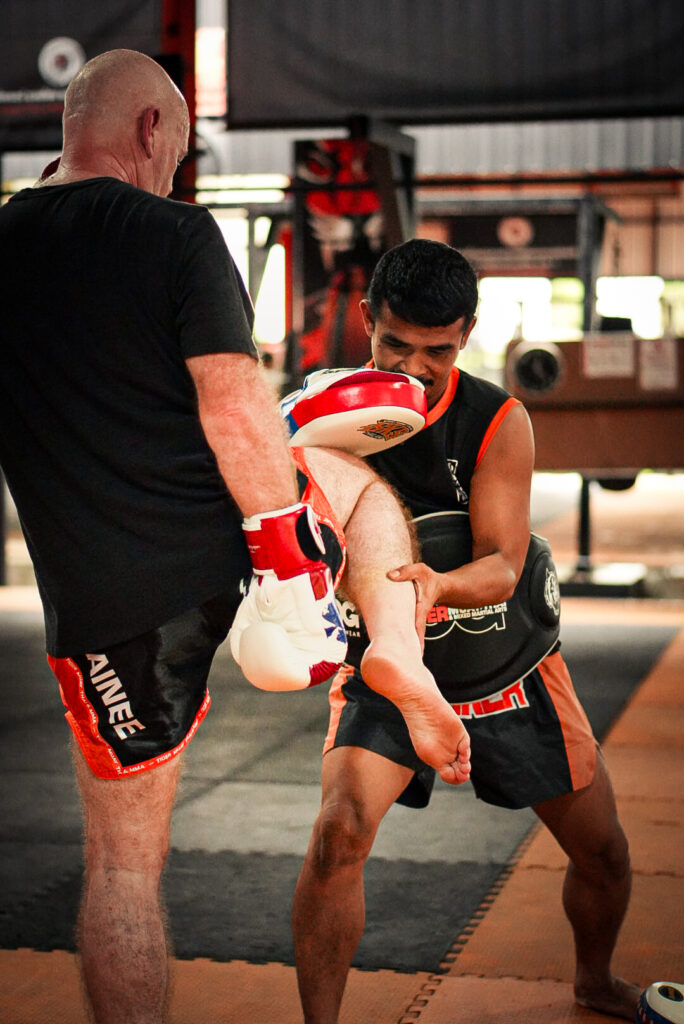
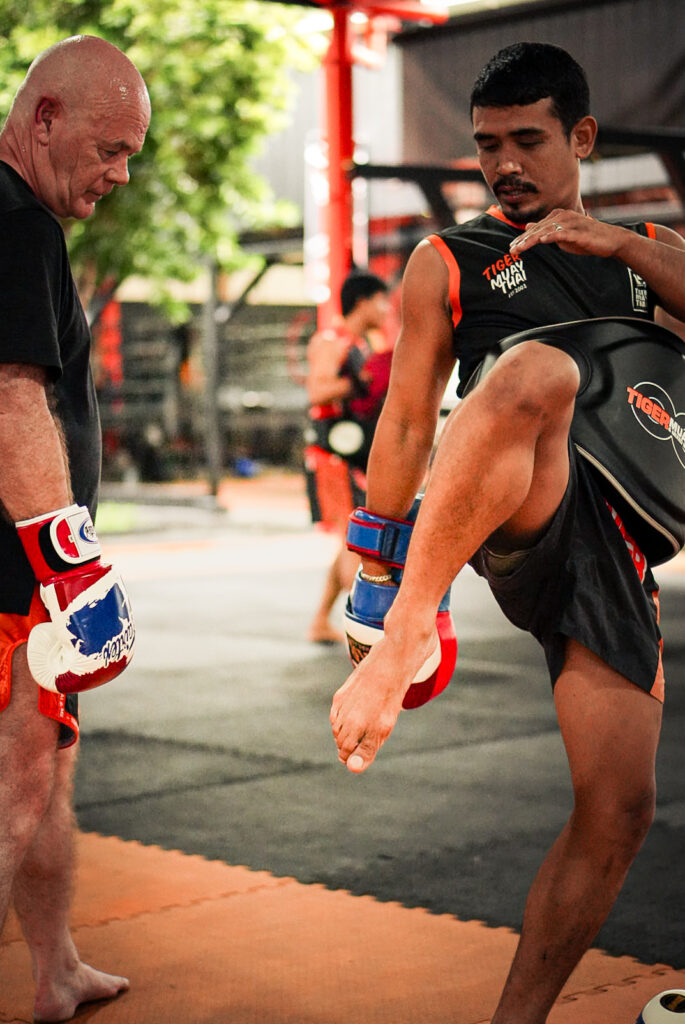
    Kru Bird demonstrating a knee strike while Mark watches
    Kru Bird catching Mark's kick on the pad
    Kru Bird demonstrating a technique as Mark holds the pads

    Kru Bird breaking down technique at Tiger Muay Thai in Phuket.

    Repetition

    Repetition sits at the heart of how beginners are taught in Thailand.

    At first, this can feel slow. The same movements repeated again and again, often with only small variations.

    But repetition is where understanding develops.

    Over time, I noticed movements becoming smaller and more economical. Balance returned more quickly. Fatigue felt more manageable. Transitions between techniques improved.

    None of this came from pushing harder. It came from allowing the body time to learn.

    For people starting later in life, this approach suits both body and mindset.

    Group classes and privates

    I initially worried that group classes would be too chaotic or impersonal.

    In practice, well-run group classes in Thailand provide an excellent learning environment. Mixed levels are managed thoughtfully. Beginners are given tasks and space to work at their own pace.

    If you need to stop, you stop.

    If you need to watch, you watch.

    Private sessions serve a different purpose. They aren’t about doing more Muay Thai – they’re about doing it more clearly.

    Many of the lessons that made group classes feel more manageable later came from one-to-one instruction.

    What beginner training in Thailand is not

    Beginner training in Thailand is not about toughness.

    It isn’t constant sparring.

    It isn’t forced exhaustion.

    It isn’t about proving resilience.

    There is no assumption that beginners want to fight. There is no expectation that everyone should train every day.

    Training is demanding – but it’s purposeful.

    Why this works later in life

    As we get older, brute force becomes less forgiving. Structure, balance, and awareness matter more.

    Thai teaching methods emphasise exactly these qualities. When applied patiently, they allow people to train consistently without unnecessary strain.

    This may explain why Muay Thai, despite its reputation, can be surprisingly suitable for people later in life – when it is taught properly.

    Thailand as a learning environment

    Despite being seen as the home of elite fighters, Thailand is also a place where beginners are normal.

    Being new isn’t unusual.

    Being older isn’t unusual.

    Learning slowly isn’t unusual.

    That normalisation removes a great deal of anxiety.

    You’re not behind. You’re just learning.

    A realistic takeaway

    Training in Thailand showed me that Muay Thai doesn’t have to be intimidating.

    When taught with patience and structure, it becomes accessible, logical, and adaptable – even later in life.

    The difference lies not in the art itself, but in how it’s introduced.

    And that difference matters.

    About the author

    Mark started Muay Thai at 56 and is now 59. Based in the UK, he trains at home between trips and at Dragon Muay Thai in Phuket, Thailand. Read more on the About page, or follow along on Instagram @muaythai50plus.

    Read more: ArticlesCan you start Muay Thai at 50?Starting Muay Thai later in life
  • Can you start Muay Thai at 50?

    Can you start Muay Thai at 50?

    1 August 2026

    Quick answer

    Yes, you can start Muay Thai at 50. How you start (pace, good instruction, recovery and the right mindset) matters far more than your age.

    Is 50 too old to start Muay Thai?

    No. Starting later in life is gradual rather than dramatic. You’ll feel awkward, tire quickly and forget combinations at first, and that’s simply learning.

    What matters more than age?

    Pace, instruction, recovery and mindset. Going slowly at the start is good judgement, not a lack of commitment.

    Do I need to be fit first?

    No. Fitness comes from training, and waiting until you feel “ready” often means never starting.

    This is almost always the first question.

    It’s rarely asked confidently. More often than not it appears quietly, somewhere between curiosity and doubt, usually followed by a mental list of reasons why the answer might be “probably not”.

    I asked myself the same thing.

    I didn’t start Muay Thai young. I had dabbled in a few different martial arts earlier in life, but didn’t come to it with decades of conditioning behind me. I came to it later in life, carrying stiffness, old injuries, questionable cardio, and a very practical concern about whether this was sensible rather than indulgent.

    So let’s answer the question without drama.

    Yes – you can start Muay Thai at 50.

    But, how you start matters far more than your age.

    Why age feels like a barrier

    I think for many people over 50, age itself isn’t the real concern.

    What worries people are the consequences they associate with it – injury, embarrassment, not keeping up, being surrounded by younger and fitter people who seem to move effortlessly.

    Spend five minutes looking at Muay Thai online and those fears feel justified. Most of what’s visible is intensity: fighters preparing for bouts, hard pad rounds, sparring, exhaustion.

    It looks impressive – but it doesn’t look accessible.

    And that creates a powerful narrative: Muay Thai is for the young, the tough, or the already fit.

    The problem is that this narrative is incomplete.

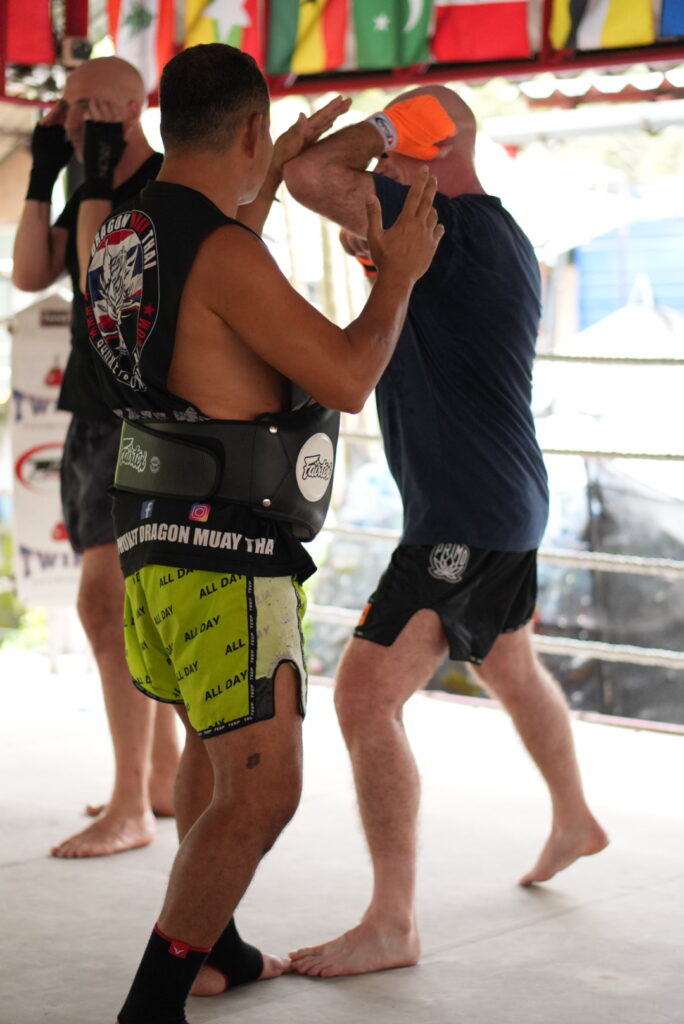
    A Dragon Muay Thai trainer checking Mark's elbow block during a session
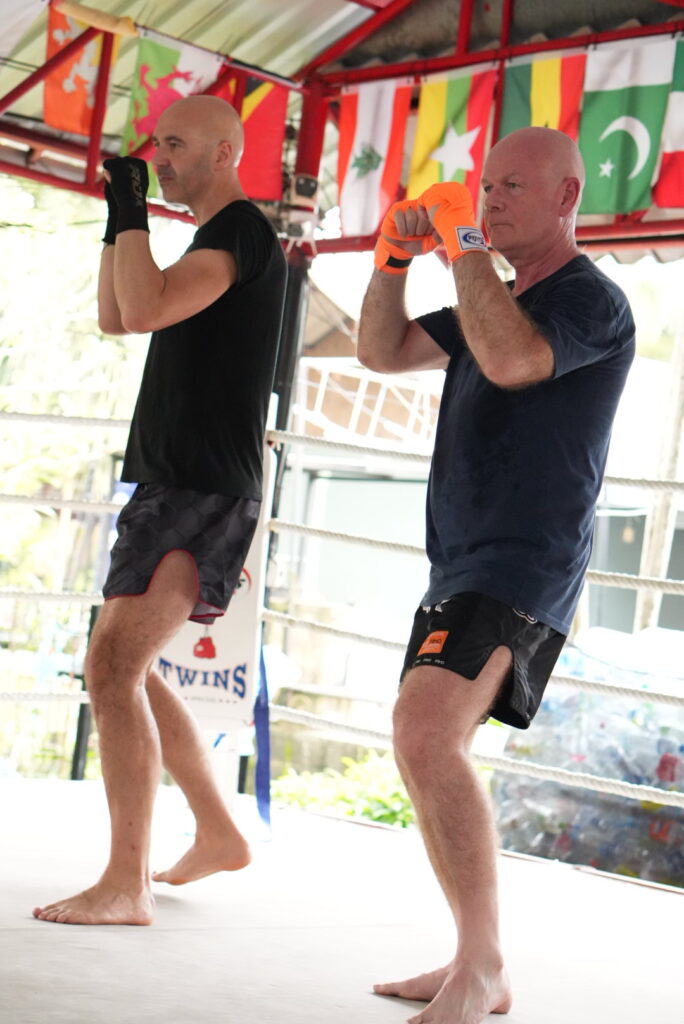
    Mark and another trainee holding their guard in the ring under the gym's flags
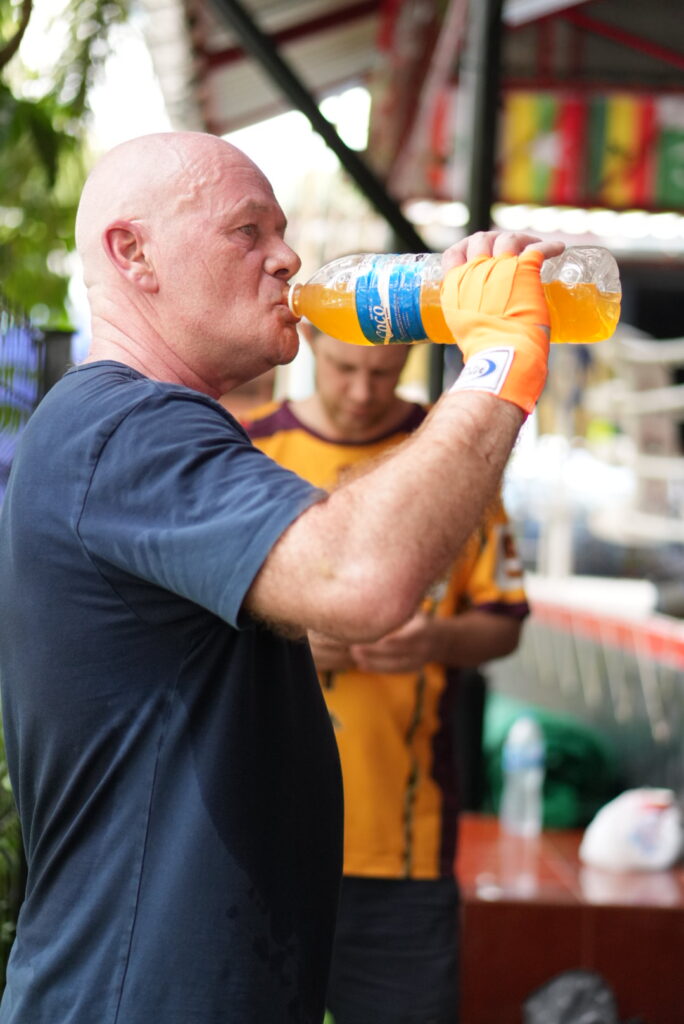
    Mark taking a drink between rounds, still in his orange hand wraps

    What actually matters more than age

    After training in Thailand, in both group classes and private sessions, it became clear that four things matter far more than the number on your birthday card.

    Pace

    Rushing is the fastest way to get hurt or discouraged. Going slowly at the beginning isn’t a lack of commitment – it’s good judgement.

    One of the most common instructions I received wasn’t “harder” or “faster”, it was simply: relax.

    Instruction

    A good trainer knows how to teach Muay Thai. A great trainer knows how to teach beginners. An exceptional trainer knows how to adapt to teaching for older bodies that need more time to warm up, more attention to balance, and more respect for recovery.

    Recovery

    At 50+, recovery isn’t optional. It’s part of training. Ice, heat, sleep, hydration, rest days – these aren’t indulgences. They’re what makes training sustainable.

    Mindset

    You’re not there to prove anything. You’re there to learn. That shift alone removes a huge amount of unnecessary pressure.

    A lesson learned very quickly

    On the first day of one of my trips to Thailand, I managed to shin the trainer’s elbow instead of the pad.

    If you’ve never done that, imagine kicking the corner of a brick wall.

    The pain was immediate and memorable, and I spent the rest of the class hobbling around wondering how the following days were going to look.

    That moment was humbling, but it was also instructive. It wasn’t that Muay Thai was too dangerous for me. It was a sign that attention, focus, and pacing matters – especially at this age.

    What older beginners should ignore

    There are a few ideas that get repeated so often they start to sound like the truth.

    “Get fit before you start”

    Fitness comes from training. Waiting until you’re “ready” often means never starting.

    “Pain is part of the process”

    Pain is information. Ignoring it doesn’t make you tough – it makes you injured.

    “You’ll slow everyone down”

    Good gyms manage mixed levels well. If they don’t, that’s a gym problem, not a you problem.

    What starting at 50 actually looks like

    Starting Muay Thai later in life isn’t dramatic. It’s incremental.
    You feel awkward at first.

    You get tired quickly.

    You forget combinations.

    You make mistakes.

    That isn’t failure – it’s learning.

    Progress comes quietly. One day you realise you’re less anxious walking into the gym. Another day you notice you’re less gassed than last week. Another day you leave a session tired but satisfied rather than overwhelmed.

    A realistic conclusion

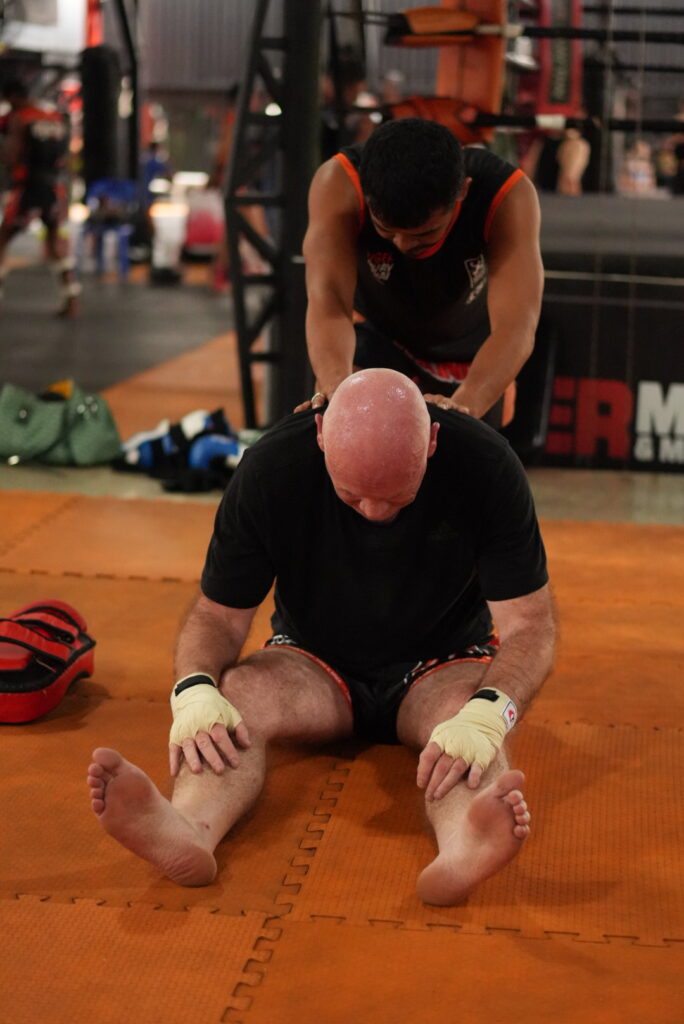
    Mark sitting on the mat at the end of a session while a trainer works on his shoulders

    Muay Thai is demanding, but it’s also adaptable. When taught properly, it’s structured, logical, and far more forgiving than it appears online.

    You don’t need to be young, you don’t need to be fearless. You just need a sensible way to begin.

    That’s what makes starting at 50 not just possible, but worthwhile.

    About the author

    Mark started Muay Thai at 56 and is now 59. Based in the UK, he trains at home between trips and at Dragon Muay Thai in Phuket, Thailand. Read more on the About page, or follow along on Instagram @muaythai50plus.

    Read more: ArticlesHow beginners are taught in ThailandStarting Muay Thai later in life